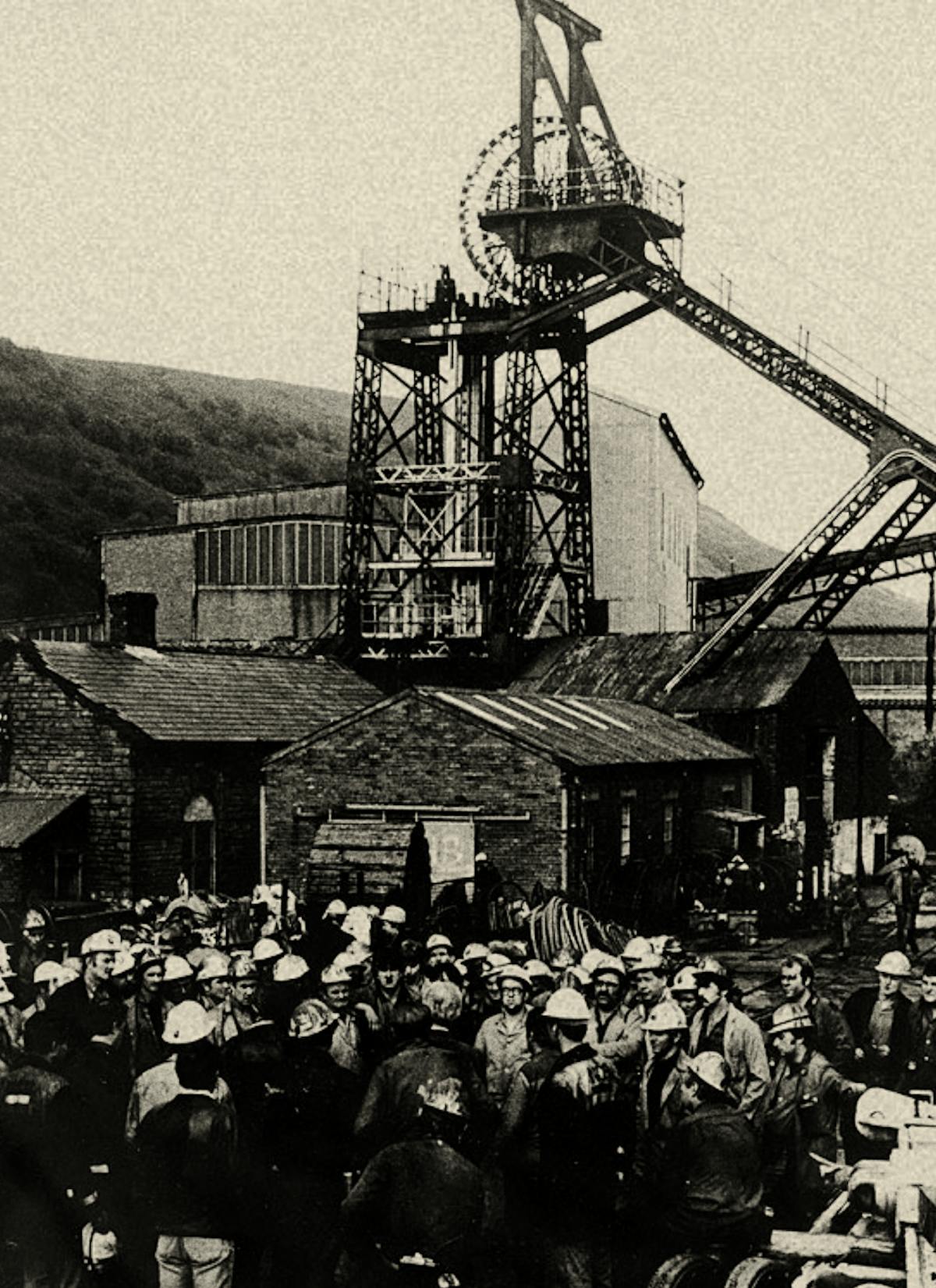
“I remember my mother’s vivid recollection of the day. At the time, my mother worked as a secretary at Navigation Yard, Abergorki Colliery, Mountain Ash. She and other office staff were called out from the offices into the stores, to help hand out shovels to the many local men who joined the recovery efforts.”
Vikki Howells, Welsh Labour Senedd Member
These are the words of Welsh Labour’s spokesperson for Environment, Farming, Energy and Transport, Vikki Howells MS, who spoke to me about the 60th anniversary of the Aberfan disaster where the collapse of a coal tip claimed the lives of 116 children and 28 adults. Although she was not yet born, these recollections are part of Vikki’s family like many others across South Wales. 2,589 coal tips still surround Welsh communities, acting as a constant reminder of Aberfan. [1] Vikki’s time as a Member of the Senedd has reflected that.
“I have dealt with a large volume of casework dealing with people living in the shadow of coal tips. Concerns are heightened, especially when we see extreme weather or incidents such as occurred in Tylorstown, or when proposals for development in the local area come forward. I can appreciate these worries so it is important not only that we make disused tips safe, but that people feel they are safe too.”
Slips in Tylorstown and Cwmtillery in recent years, although not fatal, have increased concerns about what could happen again. With climate change bringing wetter weather alongside more frequent and intense storms, the threat to tip stability is only increasing. Solutions to tip safety though, are expensive, complex and nuanced.
Coal tip extraction
After Aberfan, coal tip stability and safety improved with the introduction of the Mines and Quarries Tips Act 1969. Coal tips constructed earlier than this were likely to contain more coal due to the progression of refinement techniques over time. This combination of older, potentially less stable tips having greater coal content leaves land owners desperate for solutions and vulnerable to exploitation. Companies offer to remove tips for free in return for the commercial rights to any coal extracted. Although there is a presumption against coal extraction policy in Wales, coal tip extraction does not currently require a licence. This could give potential future Welsh Governments the ability to abandon current policies in favour of more coal mining.
Market led remediation via coal tip extraction risks setting a precedent that prioritises safety works in order of profitability, reopening coal extraction by another route. This would undermine climate commitments while trusting the type of private companies that abandoned unsafe tips to further profit from their removal.
Westminster’s forthcoming Energy Independence Bill is an ideal opportunity to prohibit coal tip extraction across the UK while relying on a new authority to keep tips safe.
The Disused Tips Authority
Vikki was part of the Welsh Government which passed the Disused Mines and Quarries Tips Act which will create the Disused Tips Authority next year.
“I’m really pleased the last Welsh Labour Government took action on this issue. The creation of a single, designated body to oversee the safety, monitoring and management of these legacies of our industrial past is a sensible step forward, giving a single point of reference and also alleviating the pressure on Welsh councils.”
Predating devolution, coal tips are a shared responsibility, which Vikki stresses. “I would hope UK Government continues to allocate the funding needed to keep communities such as the ones I represent in Pontypridd Cynon Merthyr safe.”
2024 and 2025 saw the UK Government pledge £143 million for coal tip safety in Wales until 2028. Whilst First Minister, Mark Drakeford called for £600 million of investment from Westminster for coal tip safety over ten years. As our changing climate further destabilises tips, secure long term funding must be prioritised.
With the Budget approaching, the UK Government has an opportunity to commit further multi‑year funding for tip safety measures. Simultaneously the Energy Independence Bill will be introduced and needs to close the coal tip extraction loophole. Sixty years after Aberfan, we owe it to victims and future generations to secure long term funding for tip safety, removing the temptation of commercial extraction, and ensuring the prevention of further risks from our industrial legacy.
References
[1] https://www.gov.wales/coal-tip-safety#72291
[2] https://weather.metoffice.gov.uk/climate-change/climate-change-in-the-uk
[3] https://www.legislation.gov.uk/ukpga/1969/10/contents
[4]
https://www.coalaction.org.uk/bedwas-coal-tips/
[5]
https://www.gov.wales/written-statement-petroleum-and-coal-notification-direction-update
[6] https://www.theguardian.com/politics/2025/jun/09/nigel-farage-reform-uk-welsh-elections-coalmining-revived
[7]
https://www.gov.uk/government/publications/autumn-budget-2024/autumn-budget-2024-html#:~:text=Welshcoaltipsfunding%E2%80%93ThegovernmentisprovidingtheWelshGovernmentwith%C2%A325millionin2025-26tosupportessentialworktokeepdisusedcoaltipsmaintainedandsafe.
[8]
https://www.gov.uk/government/publications/spending-review-2025-document/spending-review-2025-html#:~:text=%C2%A3118millionfortheWelshGovernmentforessentialworktokeepcoaltipsmaintainedandsafe;
[9]
https://record.senedd.wales/Plenary/12433#A67276:~:text=peopleandcommunities.-,343,-Idowant