There is a crisis of confidence among the British electorate, just 27 per cent think that the government will improve the lives of people like them, while 23 per cent feel the government doesn’t care about their communities.
When people feel overlooked by the government, and that the problems they face can’t be solved by the established political parties, they of course begin to turn to those who say they can solve their problems.
Parks and green spaces give people a sense of pride
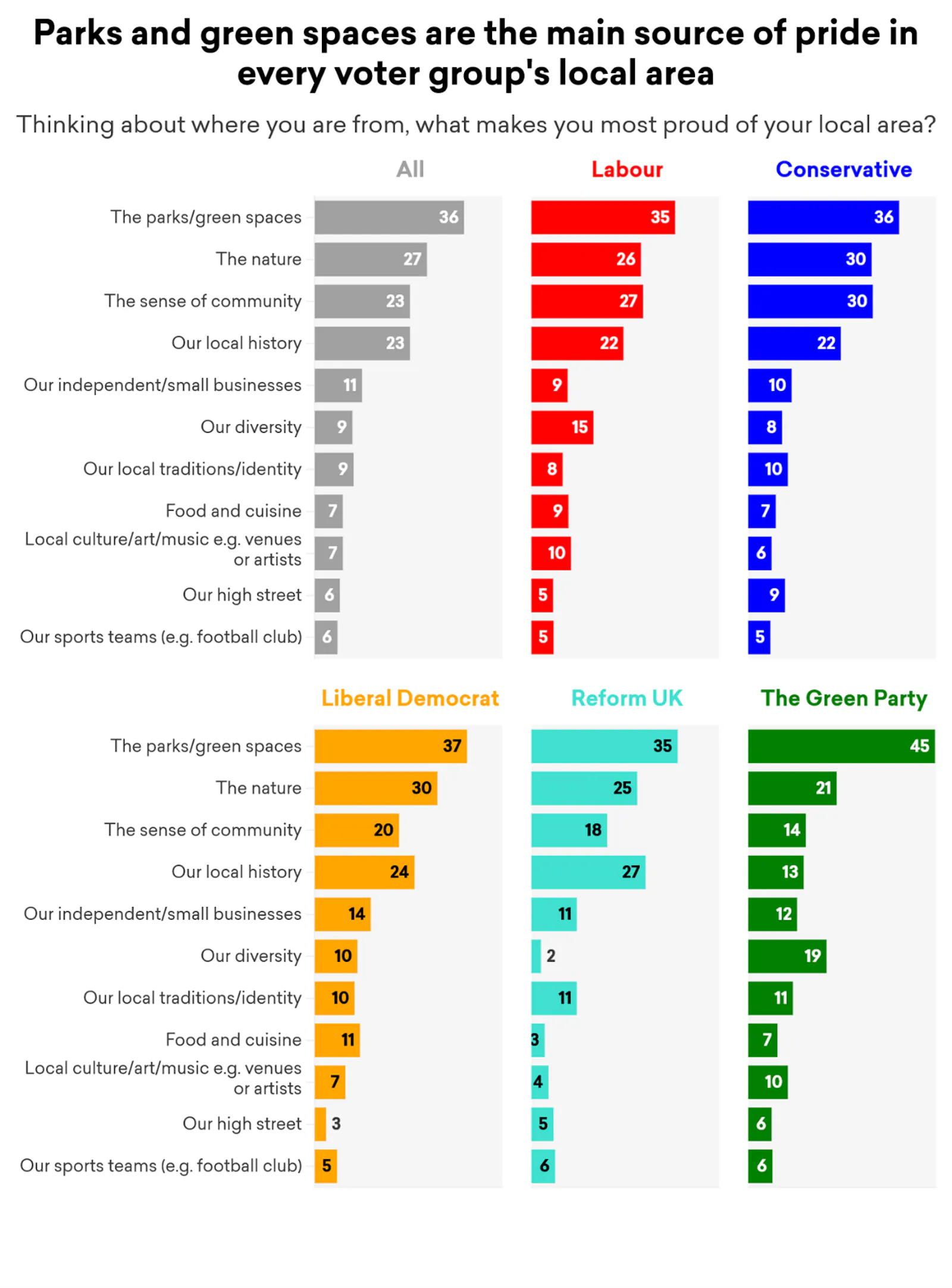
Yet, More in Common research shows that there’s one thing which unites Britons across the traditional political divides - feeling proud of and caring for green spaces. In fact, the majority of Brits (51 per cent) name either the green space or nature as their favourite thing about where they live. This is true across all voting groups from Reform to the Greens, above sense of community (22 per cent), local history (21 per cent) and local businesses (10 per cent).
So why do Britons love parks and nature?
Of course, this isn’t news. Britons love nature and green space, and this is one of the truisms of public opinion research - pit nature against anything else, and nature will win.
But the reasons why Britons care about green spaces may not be the ones politicians and sector workers expect.
The mental health benefits of being in nature come out on top, with 40 per cent of Britons saying this makes green spaces important to them. Second, is the intrinsic value of connecting to nature, closely followed by the ability to exercise.
Where policy makers often see green space as a ‘nice to have’, to the public these spaces are functional and instrumental amenities which improve their health and daily life.
In conversation many Britons reflect on the COVID lockdown as a time when they both connected with their local green space and were more dependent on their offerings.
To young people especially, parks and green space crucially provide areas to congregate outside of the watchful eye of parents and guardians.
But green spaces are not great investments because they benefit this group or that group – instead they’re great investments because they’re seen as benefitting every group in society.
As politics in the UK becomes increasingly zero-sum, green spaces remain seen as a community asset, with the majority (61 per cent) of Britons saying that they benefit everyone equally.
Green spaces are therefore able to cut across the ‘them’ and the ‘us’.
Of course, there’s competition for finances.
Green space and parks are one part of the picture, and governments have to make difficult decisions about what they invest in. However, the British public say improving the quality of green spaces in their local area would increase their confidence in their local MP above reducing rates of legal migration or reducing anti-social behaviour.
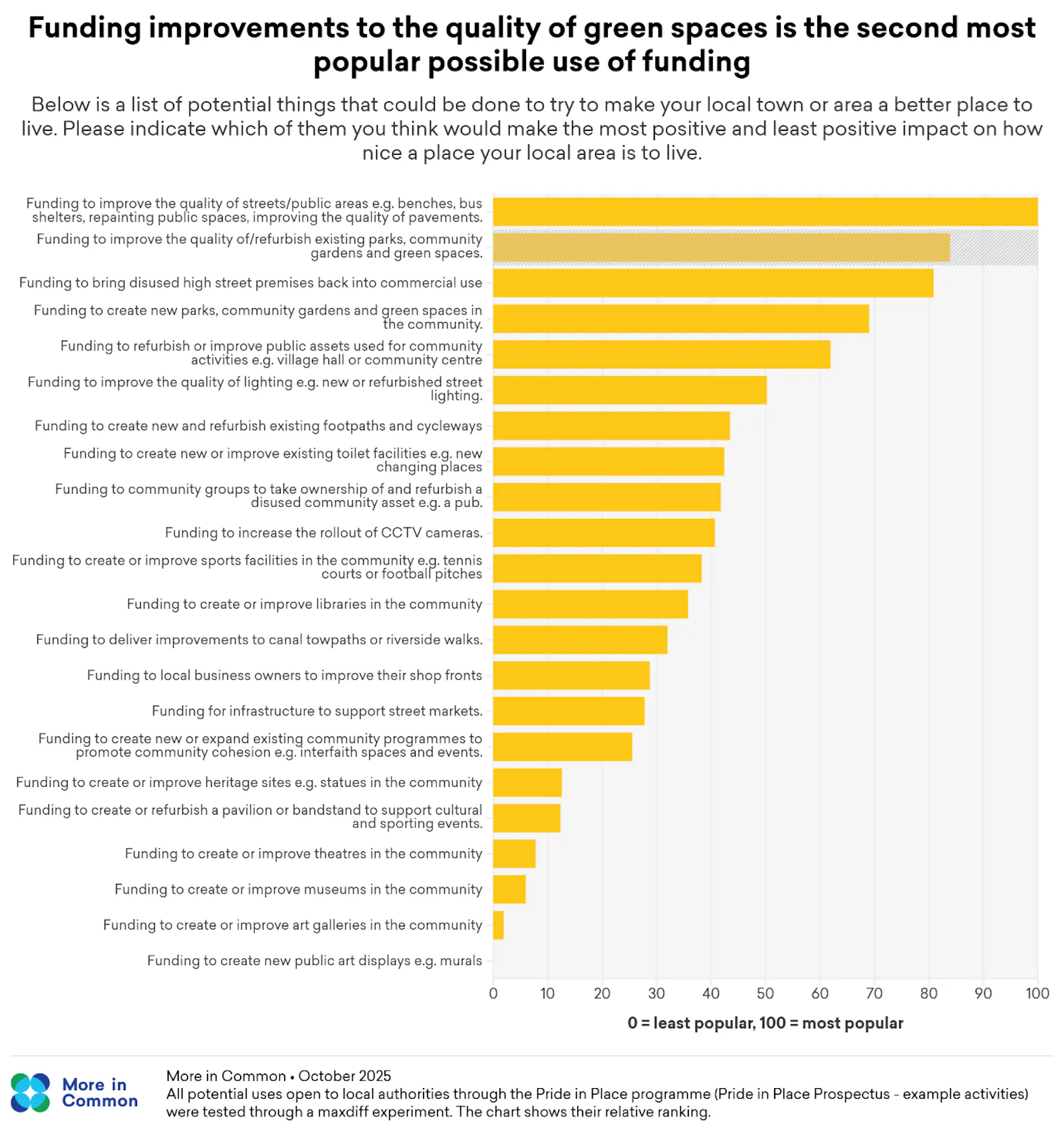
On top of this, parks and green spaces are the second most popular area of local investment to Britons, after only improvements to the quality of streets and public areas being above improving the high street or community centers.
Politicians of course can’t solve every problem that the public see but they do need to prove they can solve the most pressing problems. When most Britons feel as though politicians don’t care about them, but have immense pride in their green spaces, parks are the place to show politicians understand what makes people proud of where they live and rebuild confidence that the Government can fix the bigger issues.