Unlike the Greens, whose name betrays an obvious environmental slant, or the Conservatives and Liberals, who can draw on a rhetorical legacy of defending rural spaces, Labour lacks a founding myth on Environment. That does not mean the party has not cared for the environment; rather, the rise to political prominence of Labour coincided with the decline of Edwardian concerns around urban hygiene and sanitation.
The WWF was set up in 1962, Greenpeace 1969, and the first Earth Day was held in 1970. The forerunner to the Greens, the People’s Party, were established in 1972., and it was during this period that SERA – the Socialist Environment Resources Association – was formed, the earliest intra-party environmental campaign group amongst Labour, the Conservatives and the Liberals. SERA argued that the environment has always been a socialist cause, as seen in the works of Robert Owen and William Morris through ideas of a ‘commonwealth’ and of equal access to nature.
Despite this, early eco-socialists struggled to be heard as the majority, such as Anthony Crosland, believed environmental issues to be a fundamentally middle-class concern, the consequence of political impulses without underlying material scarcity. Yet despite this hostility from the movement, it was a Labour government who passed the 1949 National Parks and Access to the Countryside Acts of 1949, reflecting the new expectations of the state from the citizenry that it was no longer just a nightwatchman, but the provider of the good life - including access to the environment. #. As Matthew Kelly put it, “It was not a coincidence that the government which established the National Health Service also established the National Parks Commission,” ranking the National Parks in England and Wales Commission by John Dower as a peer to the Beveridge Report as part of the reforming, scientific socialism that the Attlee ministry sought to bring about through nationalised bodies. The state would no longer accept things as they were or seek to prevent change. Instead, under a reforming Labour government, the environment, like health and education, became a public good, not something that had to be earned or suffered for.
However, the post-1951 years did not see a great focus on the environment from the British left. It took until the 1960s, as detailed above, for environmentalism to return to the fore, and it was Ted Heath’s Conservative ministry that replaced the Department of Housing and Local Government with a Department of the Environment. Work began on the Thames Barrier in 1972 due to awareness of the risk of rising tides following the floods of 1953, whilst the collapse of the coal tip at Aberfan in 1966 and the shipwreck of the Torrey Canyon off Cornwall in 1967 further highlighted the environmental and human costs of a reckless ‘carbon democracy’. The universalist goals of post-war social democracy, with their emphasis on industrialisation and economic growth in pursuit of revenues to redistribute, bore their costs all too clearly in the ruins of Pantglas Junior School.
Through the 1990s, the Labour movement grew increasingly friendly to environmentalism as the influence of New Labour grew, with the 1997 manifesto promise to, “put concern for the environment at the heart of policy making … from housing and energy policy through to global warming,” with the Sustainable Development Commission established as an independent advisory body to the New Labour governments to hold them to account on their environmental record. As an unintended consequence of Thatcher’s privatisation of Britain’s energy sector, the ‘dash for gas’ in the late 1980s saw Britain replace coal-fired plants with gas ones, reducing the environmental footprint Labour had to reduce upon taking office. Regardless of this, Labour ministers post-1997 played a crucial role in negotiating the Kyoto protocol, with a climate change levy imposed on business’ energy use, a renewables obligation to encourage electricity generation from renewable sources, and accepted the 60% CO2 emissions reduction target by 2050 called for by the Royal Commission on Environmental Pollution on top of the 12.5% greenhouse gas reduction agreed to in Kyoto.
The Party’s progress has not been without blemishes though – Gordon Brown felt let down by the environmental lobby when they failed to support him against the business sector over the Climate Change Levy, whilst the petrol protests of September 2000 were the only time in the course of the 1997-2001 parliament where the Conservatives pulled ahead of Labour and under the influence of business interests, Labour approved a third runway at Heathrow in 2009. After this, air passenger duties, fuel duties and the climate change levy were allowed to slip 4% below their 2000 level by 2007, whilst DEFRA was unable to push the Treasury, Trade or Transport departments to pursue climate change more vigorously. Yet by 2006, almost 70% of the public rated environmentalism as a major issue in light of growing coverage and awareness, and the Miliband brothers, with David at DEFRA and Ed at the new Department of Energy and Climate Change, moved swiftly to head off the growing Green threat to twenty constituencies where Green support was sufficient to flip the seat Conservative. Ed forbade new coal-fired power stations being built in April 2009 without carbon capture and storage technology, whilst David Miliband was a key force in pushing for the Climate Change Act 2010, and reforms to air passenger duty and feed-in tariffs.
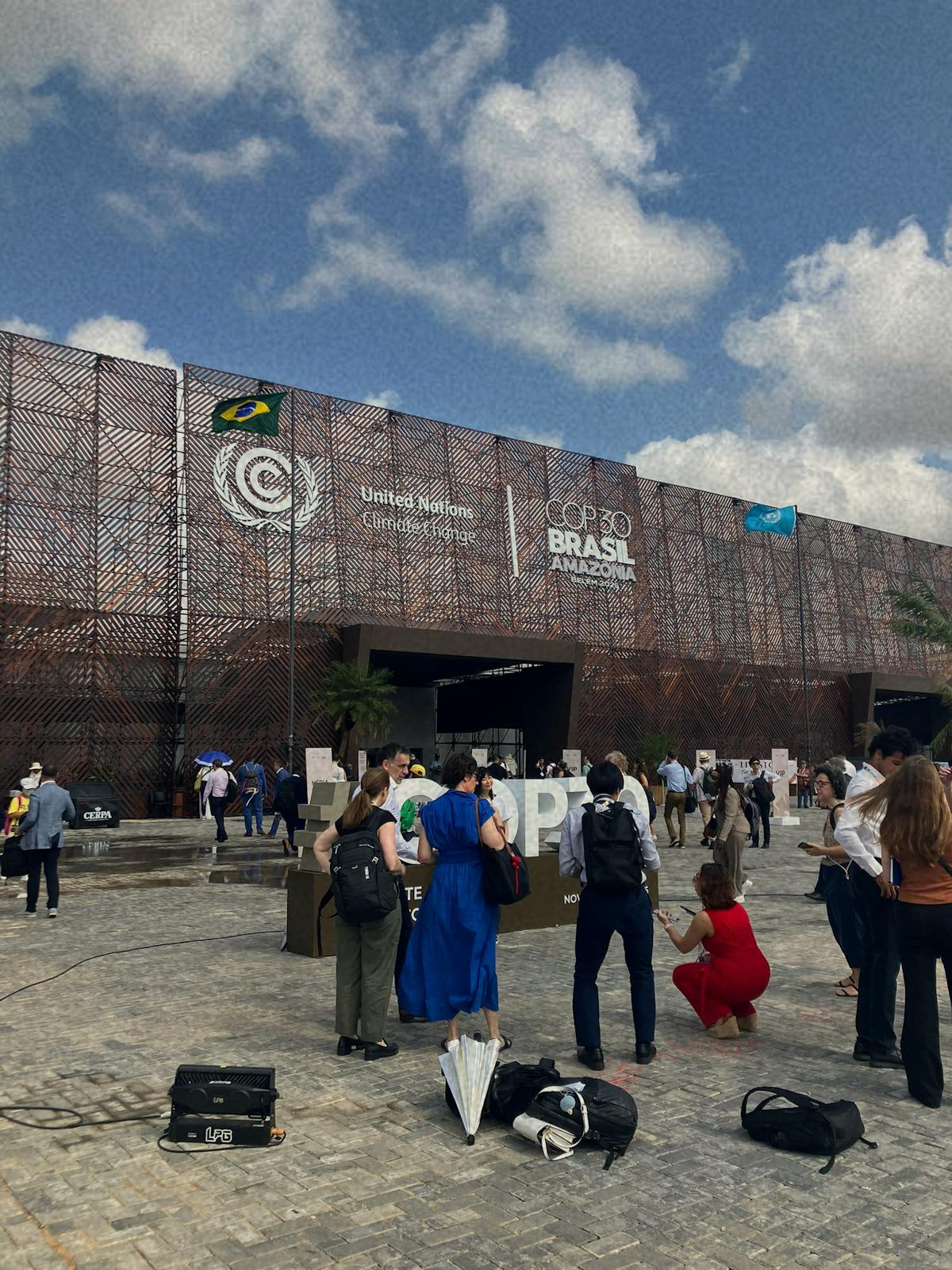
Environmental politics did not fall off the political league table after 2010, where Cameron’s coalition surprisingly abolished the Sustainable Development Commission and was under growing pressure from a sceptical backbench and hostile media. In 2019, Labour promised an ambitious ‘Green Industrial Revolution’, whilst in 2024 one of Labour’s five missions in the 2024 manifesto was to make the UK a ‘clean energy superpower’, committed to decarbonising the UK electricity system to the end of the decade and the net zero by 2050 target. The survival of such politics is all the more remarkable because of its endurance across different leaderships, from New Labour to Corbynism despite sustained business pressure and briefing against him. The Labour Party may not bear an obviously environmentalist name or rhetorical legacy, but it is the clear successor to a political tradition that has cared for the environment, all the more so since the 1960s. If Labour is to successfully continue to advance its green legacy, it must expand its conception of environmental politics. Agrarian spaces cannot be left to the Conservatives, Reform, Liberals and Greens – the politics of nature and the climate affects working people regardless of where they live.
Action on nutrient pollution, resource sustainability, infrastructure adaptation to changing climate conditions and continued support for the green transition is crucial not just for the country, but is part of Labour’s existential battle for survival. With the Greens challenging Labour’s left, and less obviously concerned with the environment, whilst the parties of the right fall over themselves in their attempts to reject the climate, there is a clear lane for Labour to care about the climate, and to position it as a core part of any future political offering. Unlike the assertions of figures like Tony Crosland, the environment is not a ‘middle class issue’ – it strikes at the fundamental core of the Labour Party, a belief in equality, in this case that a livable country should not be the preserve of the wealthy and privileged. It would do well to remember that tradition now.