Right now, beneath our feet and all around us, a colossal national resource is being poured straight down the drain. The waste heat from our data centres, factories, and even flooded old mines is so vast it could theoretically produce 310TWh a year [1] of heat, enough to warm every home in the country. Yet, as families struggle with volatile bills, this plentiful, low-carbon heat is vented uselessly into the air – nearly £20 billion worth of gas. At the current Ofgem Price Cap it would cost over £80bn to produce that much energy through electricity. [2]
Wasting heat whilst families freeze is a profound political and economic failure. We’re building the renewables to power our future but failing to build the intelligent infrastructure to use that energy fully. The result is a double loss; higher costs for bill-payers and missed opportunities for growth.
The solution is staring us in the face. Heat networks - essentially central heating for neighbourhoods and cities - can capture this waste heat and pipe it directly into homes. It’s a simple, proven idea that dominates in countries like Denmark, which heats 70% of its homes this way [3]. In the UK, we languish at around 3% [4].
The potential is staggering. Analysis from EnergiRaven suggests data centres alone could provide enough waste heat for up to 3.5 million UK homes by 2035.
Source: edie.net/waste-heat-from-data-centres-could-help-millions-of-uk-households/
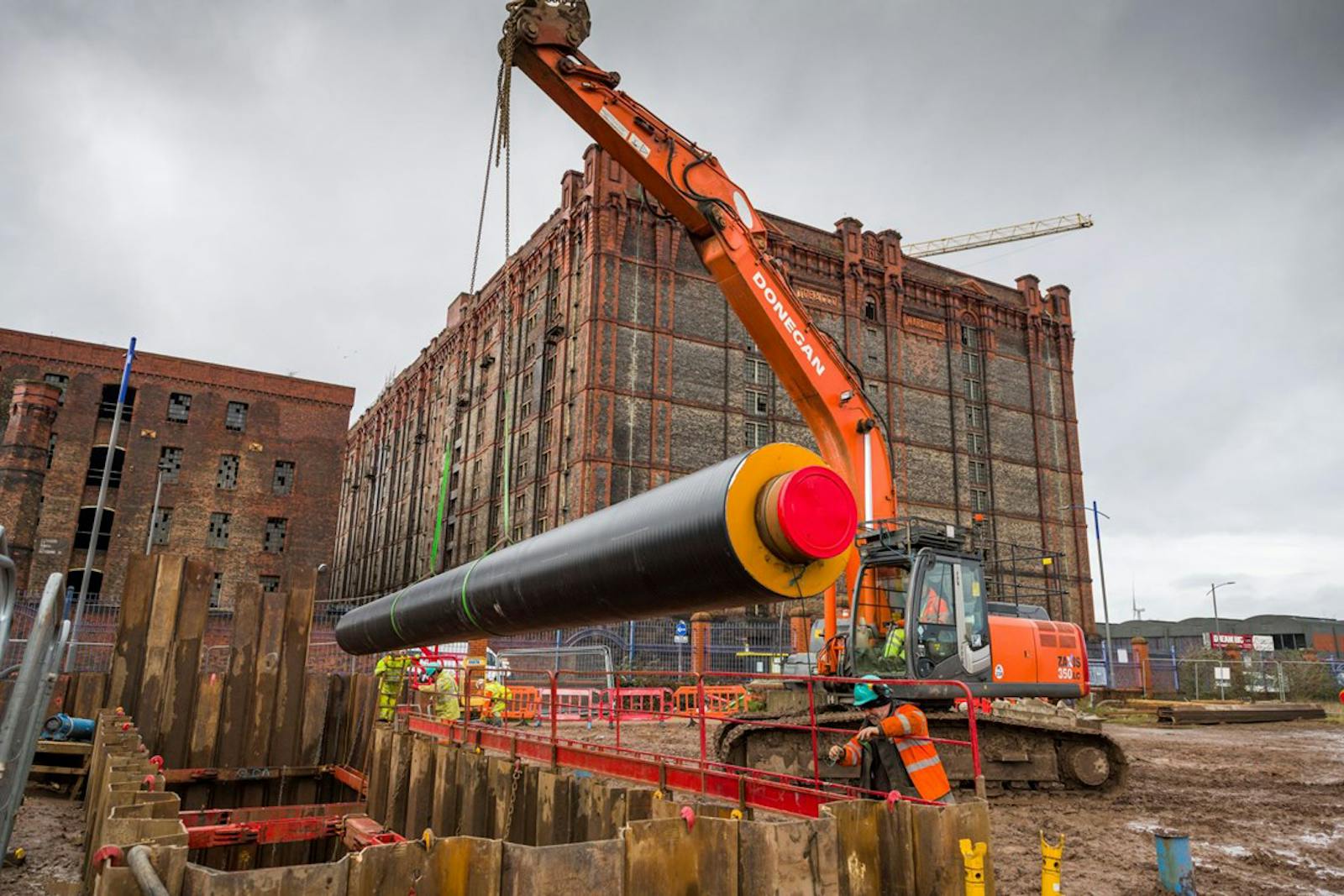
In West London homes are already being built to be heated with a data-centre heat network, in Gateshead homes are warmed by old, flooded mines, in Liverpool clean heat is taken from the river Mersey – this is all happening now.
The hold up is priorities, planning, and political will.
First, we have chronically undervalued heat as a strategic national asset. While billions are rightly invested in clean power generation, our approach to heat remains piecemeal. The government’s recent Warm Homes Plan [5], with its target to double heat network deployment by 2035, is a step. But the funding and regulatory pace must match the scale of the crisis and the opportunity. A grant fund of £195m a year is a start, but unlocking the estimated £100bn of private investment [6] that could be delivered by 2050 requires bolder market frameworks.
Second, we need to get the economics right for people. The price disparity between gas and electricity is a huge barrier. Lowering the policy costs on electricity - the fuel for many heat networks and heat pumps - is essential to make clean heat the affordable, obvious choice.
Finally, we must treat heat infrastructure as critical national infrastructure. This means giving local authorities the powers, funding and long-term certainty to plan “heat zones” strategically. This also means streamlining planning and granting heat networks statutory rights, like other utilities, so digging up a street to lay pipes isn’t a legal nightmare.
The political benefits of getting this right are immense. Tangible, local infrastructure that permanently lowers bills by switching to locally sourced heat; delivers high-skilled jobs; and energy security by making our cities more self-reliant.
We need to see an factories and distilleries not just as power drains, but as a potential community heating source. We need to wring every drop of value from the energy we produce.
The warmth for our homes is already being created. It’s time to stop wasting it and start harnessing it.
References
[1]assets.publishing.service.gov.uk/media/61371cdbd3bf7f05b166a517/opps_for_dhnnca_hc.pdf
[2] ofgem.gov.uk/information-consumers/energy-advice-households/energy-price-cap-explained
[3] committees.parliament.uk/writtenevidence/16398/pdf/
[4] assets.publishing.service.gov.uk/media/69691f66cbe2202b3842486f/heat-network-zoning-flyer.pdf
[5] gov.uk/government/publications/warm-homes-plan
[6] triplepoint.co.uk/institutional-investors/triple-point-appointed-as-delivery-portfolio-company-for-next-phase-of-the-green-heat-network-fund/